

Bridal makeup is a sequence of decisions, and the good ones are made in order: finish first, then artist, then trial, then skin, then the look for each function, then the day itself. Most disappointments come from taking the steps out of order — a look chosen from a screen before the skin is known, an artist booked before the trial, a finish chosen by name rather than by skin. This guide puts the whole sequence in one place, from the first enquiry to the last photograph at the reception, and links to the detailed guide for each step.
1. Decide the finish — by skin, not by name
Three finishes are on every Jaipur price list: traditional (a brushed base with conventional products), HD (finely milled, light-diffusing products applied thinly with brushes) and airbrush (foundation sprayed as a mist). They are not levels of quality; they are tools for different skins and situations.
- Good, even skin and long or humid functions → airbrush is a strong choice.
- Dry, mature or textured skin, precise correction, a cream-based dimensional look → a brushed HD base.
- Sensitive skin → water-based airbrush or a brushed base with tested products, patch-tested.
The full comparison for brides is HD, Airbrush or Traditional?; the technical explanations are on our academy site — What is HD Makeup? and What is Airbrush Makeup?.
2. Choose the artist — by full galleries and a trial
Shortlist three artists whose full wedding galleries show brides like you — your skin depth, your outfit colours — photographed by wedding photographers. Ask who will personally be at your chair for each function, what the price includes, how the kit stays clean, and what happens if the artist is unwell. Then let the trial decide. The questions, what good answers sound like, and the red flags are in How to Choose the Right Makeup Artist; a sourced Jaipur shortlist is in Top 10 Makeup Artists in Jaipur; what a quote should include is in Bridal Makeup Cost in Jaipur.
3. The trial — daylight, jewellery, flash
Book it four to eight weeks before the wedding, once the outfits and jewellery are final. Bring the outfit colours (or the outfits), the jewellery, references you like and dislike, and a bare-faced daylight photo. The trial happens in daylight, the shade is matched on the jaw and chest, and one photograph is taken under flash in a dim corner — the single most useful photograph of the whole process. Keep the trial photos and the artist's notes; the wedding-day look is built from them.
4. Prepare the skin — for weeks, not days
Makeup shows what is under it. The month before the wedding is for hydration, gentle exfoliation, sun protection, sleep and no experiments: no new products, no peels or lasers in the final four weeks, the last facial ten to fourteen days out, and a patch test for anything first-time. The day-by-day plan, with the dermatology-sourced cautions, is the 30-Day Bridal Skin Preparation Guide.
5. Plan the look for each function
The base and the artist stay the same across functions; the intensity and colour change.
| Function | Character | Base | Eyes | Lips | Notes |
|---|---|---|---|---|---|
| Mehendi | Fresh, daytime, often outdoors | Light, satin, sweat-resistant | Soft, warm, minimal liner | Coral, peach, warm pink | Sun, heat and hands full of mehendi — nothing that needs touching up |
| Haldi | Bare, glowing | Sheer, waterproof where possible | Barely there | Balm, tint | Turmeric stains; keep the base minimal and the skin protected |
| Sangeet | Glam, evening, stage light | Satin to dewy, well set | Shimmer, defined liner, lashes | Bold or deep | Stage and camera light; test the shimmer under flash |
| Wedding | Fullest, most traditional | Matched to the outfit's era and palette | Defined, often kajal + wing, lashes | Red family chosen by undertone | The longest function; longevity first |
| Reception | Polished, contemporary | Satin, luminous | Soft smoky or clean liner | Deeper, sophisticated | Evening, indoor, close-up photographs |
Outfit colour steers the palette: a red lehenga takes a matched red or a deliberate contrast (nude, mauve); pastels take soft, luminous skin and defined eyes; ivory takes warmth and glow; jewel tones take an eye or a lip in the same family, not both. Jewellery steers the temperature: gold and polki warm the palette; diamonds and silver cool it. Regional style matters in Rajasthan — Rajputi bridal looks are strong, symmetrical and traditional, with defined eyes and a classic red; Bengali bridal looks carry the chandan patterns and a bold red — and an artist who does both should show both in her gallery.
6. The wedding-day timeline
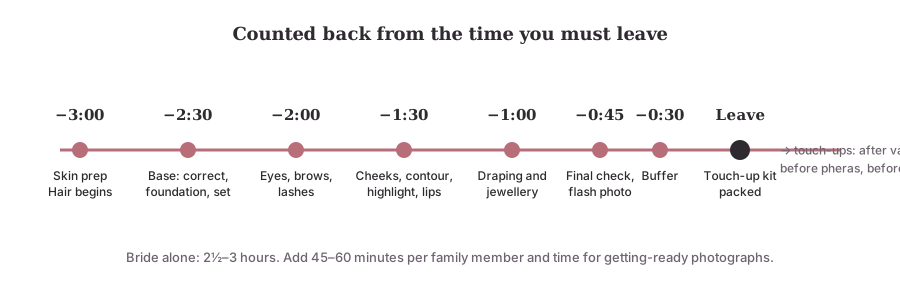
Counted back from the time you must leave:
- −3:00 Skin prep; hair begins (hair first, so heat and pins are done before the base).
- −2:30 Base: correction, foundation, concealer, set.
- −2:00 Eyes, brows, lashes.
- −1:30 Cheeks, contour, highlight; lips.
- −1:00 Draping and jewellery, with the artist present to adjust the look against the outfit.
- −0:45 Final check in daylight and one flash photograph; touch-up kit packed.
- −0:30 Buffer. Nothing is scheduled here on purpose.
Rule of thumb for the whole morning: two and a half to three hours for the bride alone; add forty-five minutes to an hour per family member, and time for getting-ready photographs if the photographer wants them.
7. Longevity: making it last
- Skin preparation for weeks beforehand does more than any product on the day.
- Thin layers wear gradually; heavy layers break in a sheet.
- Set where the skin oils, not everywhere; heavy powder flattens the face and risks flashback.
- Long-wear eyes: primed lid, gel or liquid liner, waterproof mascara, kajal set with powder.
- Setting spray from arm's length.
- Plan the touch-up points — after the varmala, before the pheras, before the reception entry — rather than reacting to shine.
- Tears happen: waterproof formulas and a cotton bud, dabbed, not wiped.
8. Photographs
Makeup is judged in the album. Three things change how it photographs: flash (silica-heavy powders and SPF-heavy bases reflect white), colour temperature (warm venue lighting and cool LED stage light shift skin tone), and distance (a wing that looks bold in the mirror reads as fine from the mandap). The trial's flash photograph anticipates the first; the artist's venue knowledge handles the second; a touch more definition than daytime handles the third. Why Professional Makeup Looks Different in Photos explains each.
9. Jaipur specifics
Dry heat, dust, winter evenings that drop sharply after sunset, palace courtyards and lawns lit by string lights — Jaipur's weddings ask specific things of makeup. The Jaipur Wedding Makeup Guide covers season by season and venue by venue.
10. Mistakes to avoid
- Choosing a look from a screen instead of a trial.
- Booking the artist before the trial; skipping the trial to save money.
- Trying new skincare in the final weeks.
- Asking for "full coverage" when the skin needs thin layers and targeted concealer.
- Heavy powder everywhere; SPF-heavy base under flash.
- Ignoring undertone when choosing the lip — a warm bride in a blue-red, a cool bride in an orange-red.
- Scheduling with no buffer.
- Bringing a committee to the trial.
From Chhaya Yadav's experience
Observations from bridal work in Jaipur — professional observations, not statistics.
- The order matters more than any single choice. Brides who decide finish, artist and trial in that order arrive at the wedding calm; brides who start from a reel arrive with a look that was never tested on their own face.
- Hair before base, always. Heat, pins and spray over a finished base undo it; the base goes on after the hair is set.
- The flash photograph at −0:45 has changed a lip shade more than once — and saved the album each time.
- The buffer half-hour is not optional. Something always takes longer; the buffer is what keeps the bride from leaving with a rushed lip.
- Jaipur winters surprise brides. A December reception on a lawn drops to single digits after sunset; a dewy base that looked perfect at 6 p.m. can feel tight and look dull by 10. A satin base with a warm highlight holds.
Frequently asked questions
How early should bridal makeup start on the wedding day? For the bride alone, plan two and a half to three hours for makeup, hair and draping, finishing thirty to forty-five minutes before you must leave. Add time for each family member and for photographs of getting ready.
Should I do a different look for each function? Yes, in intensity and colour, not in identity. Mehendi and haldi are lighter and fresher; sangeet is glam; the wedding is the fullest, most traditional look; the reception is polished and often more contemporary. The base and the artist stay the same.
HD, airbrush or traditional for the wedding? It depends on your skin, the venue and the hours. Airbrush suits good, even skin and long humid functions; a brushed HD base suits dry, mature or textured skin and precise correction. The trial — in daylight and under flash — decides.
How do I make bridal makeup last all day? Skin preparation for weeks, a thin base set only where the skin oils, long-wear eye products, setting spray, and small touch-ups planned for the gaps between rituals. Heavy layers break; thin layers wear gradually.
What should be in my touch-up kit? Blotting papers, the lipstick and liner used, a small pressed powder in your shade, cotton buds, a setting mist, safety pins and a mirror. Your artist will usually pack it from what she used on you.
What is the most common bridal makeup mistake? Choosing a look from a screen instead of from a trial. A look that photographed beautifully on another bride's face, skin and outfit may not on yours; the trial exists to find out in advance.
Key takeaways
- Decide in order: finish by skin → artist by galleries → trial in daylight and flash → skin for weeks → look per function → the day's timeline.
- Three finishes are three tools, not three grades.
- The trial's flash photograph is the most useful picture of the whole process.
- Thin layers, targeted setting and planned touch-ups make makeup last; heavy layers do not.
- Two and a half to three hours for the bride, hair first, a half-hour buffer, and no committee.
Related reading
More from this series
- Bridal Makeup vs Party Makeup: why the wedding face is built differently — duration, camera, ritual, and the pieces that frame it
- Makeup According to Bridal Jewellery: gold, kundan, polki, diamonds, silver and stones — how the metal and the pieces set the palette and the placement
- Bridal Makeup for Different Skin Types: oily, dry, combination, sensitive, acne-prone and mature — what changes, and what to tell your artist